Wednesday, April 22, 2026

M. Subramanya Raje Urs (Chaduranga) - Biography

M. Subramanya Raje Urs (Chaduranga)

M. Subramanya Raje Urs (pen name: Chaduranga) was born in Kallahalli village in Hunsur Taluk of Karnataka on 1 January 1916, to parents Mudduraje Urs and Marudevammani.  The couple had thirteen children, out of which only four survived. Subramanya was the youngest of them! Mudduraje Urs was a descendant of the Gangas of Talakad, and his mother, Marudevammani, was a descendant of the famous King and poet Mangarasa.


Ancestry

The great-grandfather of Subramanya Raje Urs, Basavaraje Urs, was proficient in the game of Chess and used to play regularly at the palace with HH Mummadi Krishna Raje Wodeyar. In fact, this was one of the reasons why the family came to be later known as the Chaduranga household. Basavaraje Urs would always take care to lose the game to the Maharaja, in an attempt to never appear disrespectful. Once, he got distracted by some thoughts and ended up defeating the Maharaja. The King got infuriated and threw a piece of furniture at Basavaraje Urs, leaving a scar on.....


To read the rest of the biography, Click Here. 

Sunday, December 21, 2025

New Book - SRIKANTHIKA (2025 Reprint) - Dr. S. Srikanta Sastri Felicitation Volume

This Felicitation Volume, titled "Srikanthika" was presented to Dr S. Srikanta Sastri by the felicitation committee of the University of Mysore in 1973. It soon got sold out, in spite of its high price in India and abroad at that time. Soon the diligent students and research scholars began to look for a second hand used copy in old bookshops.

This felicitation volume published in 1973 is a repository of well researched historical articles contributed by fifty six eminent historians and litterateurs of South India. These scholarly articles are still relevant and pertinent to contemporary world of historical research. Some of the articles can be termed as “dated” and recent discoveries and findings might have become gospel truth by virtue of its veracity and proof. These developments were envisaged by the eminent historian Dr. S. Srikanta Sastri in advance. The course of history takes new turns due to vicissitudes of passage of time. He had predicted that new inscriptions, new excavations, coins, texts and new technology may throw fresh light on our understanding of history and our theories of civilizations, wherein we have to revise our earlier interpretation of events.

This felicitation volume contains research articles written in English, but interspersed with Sanskrit, Kannada and Ancient Kannada quotations. 

Another exceptional feature of “Srikanthika” felicitation volume is that it is devoid of personal reminiscences, autobiographical narrations and hagiographical hosannas about the eminent historian and polyglot by his admirers. This is a volume dedicated to academic research work by great scholars of the day. That is why this volume is already there on the shelves of more than a dozen international libraries according to WorldCat Catalogue. Now, this book with added photographs and an exhaustive catalogue of Dr S. Srikanta Sastri's works, has been reprinted (available both in Hardbound and Paperback formats) by NotionPress, Chennai. Editing of this reprint was done by S. Naganath. It is hoped that, the reprinted edition of this Felicitation Volume, replete with rare and scholarly articles, will enable discerning scholars and students of history to procure a copy, where one was unavailable till now. 


To procure copies (within India), please click on the following link:

SRIKANTHIKA | Felicitation Volume (2025 Reprint)


Monday, October 6, 2025

M. Yamunacharya: Brief Biographical Sketch

Biography of M. Yamunacharya
Mettupatti Yamunacharya (M. Yamunacharya) was born on 30 September 1899 to parents Narayana Iyengar and Manikyamma. Manikyamma’s father, Alkondavalli Govindacharya Swamy, was an Executive Engineer in the Mysore Government under Diwan Seshadri Iyer. In this capacity, Govindacharya was instrumental in building various sections of the Bangalore Mysore Railway line, including bridges near Maddur and across the Kapila River near Nanjanagud. He was a staunch proponent of Sri Vaishnavism and was a contemporary of A. R. Wadia at the University of Mysore. Yamunacharya’s ancestors hailed from Mettupatti, Salem. Govindacharya’s father, Sreenivasa Iyengar, had taught English grammar lessons to HH Nalwadi Krishna Raja Wodeyar IV and was popularly known as ‘Angrezi Sreenivasa Iyengar’ for this reason! Sreenivasa Iyengar’s first son and Govindacharya’s elder brother, Sreenivasa Raghavacharya, was Assistant Commissioner of Mysore for a brief period as well. 


EARLY YEARS & EDUCATION
Yamunacharya had his schooling at Marimallappa High School, Mysore, under the tutelage of ‘Mysore Thathiah’ (Sri Venkatakrishnaiah). Most remember Yamunacharya as being an introvert who resented competition, disliked Mathematics and wasn’t particularly academically driven, in any sense of the word. Subsequently, in 1923, he enrolled into Maharaja College, Mysore to.....

To Read the full biography of M. Yamunacharya, please click on the link - M. Yamunacharya

Tuesday, March 25, 2025

Tirumalai Krishnamacharya - A Brief Biography

Tirumalai Krishnamacharya - A Brief Biography
Tirumalai Krishnamacharya (TK) was born on 18 November 1888 in Muchukundapuram village, Chitradurga district to T. Sreenivasa Thathacharya and Ranganayakamma. They were orthodox brahmins hailing from Tirupati (Tirumalai) and were descendants of Yogi Nathamuni – a famed 9th century Sri Vaishnava saint. Krishnamacharya’s father was a great exponent of the Vedas. An ancestor in the family line had been a chief pontiff of the Parakala Matha. Krishnamacharya was the eldest of six children. He had two younger brothers – Narayana and Appalacharya & three younger sisters – Alamelu, Tangamma and Chudamani. The family spoke in Telugu at home and were fluent in Sanskrit also.


Early Years & Education
Tirumalai Krishnamacharya’s circle of friends included Rallapalli Ananta Krishna Sharma, Bagepalli Sreenivasacharya, Laxmipuram Sreenivasacharya and Tirukulagundam Sudarshanacharya – all renowned exponents of music, Sanskrit and Vedanta in their own right! His father taught him Sanskrit at home. Among the precious few things handed down to Krishnamacharya was a treasured volume of Valmiki’s Ramayana (in Sanskrit). This was held in reverence by his grandfather and would remain by Krishnamacharya’s side till his very end.

Krishnamacharya’s family moved to Mysore when he was 12 years of age. He joined Parakala Matha for his studies. Here, he spent time between 1909 and 1914 learning Logic (Tarka) and Vedanta among other things. During these years, he also learnt Veena from Vidwan Veena Seshanna.

In 1914, he set out to Benaras, where he continued further studies in Sanskrit & Tarka (logic) from Brahmasri Shivakumar Sastry. He attended classes at Queen’s college under......

To read the full article, Click Here. 

Monday, August 12, 2024

‘Yogamaye’ by Dr. S. Srikanta Sastri (republished in ‘Viveka Prabha’ Magazine – August 2024)

ಶ್ರೀರಾಮಕೃಷ್ಣ ಪರಮಹಂಸರ ಜೀವನಚರಿತ್ರೆಯಲ್ಲಿ ಅನಾದಿಯಾಗಿ ಭಾರತೀಯ ಸಂಸ್ಕೃತಿಯಲ್ಲಿ ಕಂಡುಬರುವ ಅನುಭವ ಸಿದ್ದವಾದ ಆಧ್ಯಾತ್ಮಿಕ ತತ್ವಗಳಿಗೆ ನಿದರ್ಶನಗಳು ಪುನಃ ಪುನಃ ಕಂಡುಬರುವುದು ಆಶ್ಚರ್ಯವಾಗಿದೆ.

ಸರ್ವಮತ ಸಮನ್ವಯರೂಪವಾದ ಅದ್ವೈತಾನುಭೂತಿಗೆ ಪ್ರತ್ಯಕ್ಷ ದೃಷ್ಟಾನ್ತಗಳು ಸಿಕ್ಕುತ್ತವೆ. ಭಗವಾನ್ ಶ್ರೀ ರಾಮಕೃಷ್ಣರ ಒಂದೊಂದು ಸಾಧನೆಯಲ್ಲು ಆಯಾ ಸಂಪ್ರದಾಯ ಗ್ರಂಥಗಳಲ್ಲುಕ್ತವಾದ ತತ್ವಗಳು, ಹಂತಗಳು ನೈಸರ್ಗಿಕವಾಗಿ ಅಭಿವ್ಯಕ್ತವಾಗಿವೆ. ಶೈವ, ವೈಷ್ಣವ, ಕ್ರೈಸ್ತ, ಬೌದ್ಧ, ಇಸ್ಲಾಂ ಪಂಥಗಳಲ್ಲಿ ವಿಧಿಸಿರುವ ಆಯಾ ಸಾಧನ ಕ್ರಮಗಳ ಫಲಗಳಿಗೆ ಜೀವಂತ ನಿದರ್ಶನಗಳು ಕಂಡುಬರುವುದರಿಂದ ಸರ್ವಮತಗಳನ್ನೊಳಗೊಂಡು ಎಲ್ಲಕ್ಕು ಅತೀತವಾದ ಆದ್ವಿತೀಯಾನುಭವವೇ ಪರಮಧ್ಯೇಯವೆಂದು ಸಿದ್ದವಾಗಿದೆ.

ಶ್ರೀ ಶಂಕರಾಚಾರ್ಯರು ಹೇಳಿದಂತೆ ಮೋಕ್ಷವು ಉತ್ಪಾದ್ಯ, ವಿಕಾರ್ಯ, ಸಂಸ್ಕಾರ್ಯ ಮತ್ತು ಆಪ್ಯ ಎಂಬ ಚತುರ್ವಿದ ದ್ರವ್ಯ ವಿಲಕ್ಷಣವಾಗಿರುವುದರಿಂದ ಸಾಧ್ಯವಲ್ಲ; ಸಿದ್ದವಾದುದು ಸಿದ್ದವಾಗಿರುವುದನ್ನು ಸಾಧಿಸಲು ಪ್ರಯತ್ನಿಸುವುದು ಅವಿದ್ಯಾ ಮತ್ತು ಅಜ್ಞಾನ ರೂಪವಾದ ಮಾಯೆಯಿಂದ ಪ್ರಚೋದಿತವಾಗಿದೆ.


To read the full article, Click here

Thursday, July 11, 2024

'Dr. S. Srikanta Sastri' by Dr B. R. Gopal (Historiography of Karnataka)

I consider myself fortunate for having been invited by the Mythic Society to present a paper on the contributions of Dr. S. Srikanta Sastri to research in Karnataka History & Culture. I have had the fortune of sitting at his feet to learn for more than five years from 1949 onwards. I joined the History Honours class in 1949 when I met for the first time Dr. S. Srikanta Sastri. I may be excused for a personal note with which I am starting this paper, for the impact of his personality upon me is something that could only be experienced and not easily expressed. When he first engaged the class he was unimpressive. Amidst the well-dressed teaching faculty of the Maharaja's College he was the most unkempt, if I could say so, with the trouser almost dangling, a loose coat uncared for, thick spectacles covering the troubling eyes and seemingly unsocial. Often he would rush into the class with even a lungi. He never missed a class. Once or twice, we, for some reason or the other, took a holiday but the next day we could find him commence his lecture on a fresh topic with a preface that the earlier topic had been covered by him in the previous class which had not been attended by us en masse, but attended only by him and he would take it a lecture delivered, what if the students were not there! This made us take care that we would not miss his class.

To read the full article, Click Here

Wednesday, June 26, 2024

Chitradurgada Bakhairu (ಚಿತ್ರದುರ್ಗದ ಬಖೈರು)

ಇತಿಹಾಸ ಸಂಶೋಧನೆ

ಚಿತ್ರದುರ್ಗದ ಬಖೈರು

[ಸಂಗ್ರಹಿಸಿದವರು - ಶ್ರೀ ಹುಲ್ಲೂರು ಶ್ರೀನಿವಾಸ ಜೋಯಿಸರು, ಕ್ಯೂರೇಟರ್, ಪ್ರಾಚ್ಯ ಸಂಶೋಧನ ಮ್ಯೂಸಿಯಮ್, ಚಿತ್ರದುರ್ಗ]


ಲೇಖಾoಕ – ೧

ಮಹಾರಾಷ್ಟ್ರರು ಅಭ್ಯುದಯವನ್ನು ಹೊಂದಿದ್ದ ಕಾಲದಲ್ಲಿ ತಮ್ಮ ಪಕ್ಷದ ರಾಯಭಾರಿಗಳನ್ನು ನಾನಾ ಅರಸುಗಳ ಆಸ್ಥಾನದಲ್ಲಿ ಇರಿಸಿದರು. ಹಾಗೆ ನಿಯಮಿತವಾದ ರಾಯಭಾರಿಗಳು ಆಯಾ ರಾಜ್ಯದ ರಾಜಕೀಯ ಸ್ಥಿತಿಯನ್ನು ಕುರಿತು ಪೇಷ್ವೆಯವರಿಗೆ ದೀರ್ಘವಾದ ರಾಜಕೀಯ ಪತ್ರಗಳನ್ನು ಬರೆಯುತ್ತಿದ್ದರು, ಈ ಪತ್ರಗಳಿಗೆ "ಬಖೈರು" ಎಂದು ಹೆಸರು ರೂಢವಾಗಿದೆ. ಇಂತಹ ಬಖೈರುಗಳನ್ನು ಚಿತ್ರದುರ್ಗದ ಪ್ರಸಿದ್ಧ ಸಂಶೋಧಕರಾದ ಶ್ರೀ ಹುಲ್ಲೂರು ಶ್ರೀನಿವಾಸ ಜೋಯಿಸರು ಸಂಗ್ರಹಿಸಿದ್ದು ವಾಚಕರಿ ಪರಿಚಯ ಮಾಡಿಕೊಡಲು ಉದ್ದೇಶಿಸಿದ್ದಾರೆ. ಪೂನಾ ಪೇಶ್ವೆ ಶ್ರೀಮಂತ ಮಾಧವರಾಯನ ಕಾಲದ ಪತ್ರವ್ಯವಹಾರವನ್ನಿಲ್ಲಿ ಮಾಡಲಾಗಿದೆ.


ಮದಕರಿನಾಯಕನಿಗೆ ಹೈದರಾಲಿಯ ಪತ್ರ

ಪೂನಾ ಪೇಷ್ವೆಗೆ ಮರಾಠಿ ರಾಯಭಾರಿ ವಿವರಣೆ

ಮಹಾರಾಜೇಶ್ರೀ ಮಾಧವರಾವ್ಪಂತ್ (ಪೂನಾ ಪೆಶ್ವೆ, ಜನನ ೧೮ - ೪ - ೧೭೭೪, ಮರಣ ೨೭ - ೧೦ - ೧೭೯೫; ಆಗರ್ಭ ಶ್ರೀಮಂತ ಛತ್ರಪತಿಯು ಈ ಮಗುವಿನ ೪೦ನೇ ದಿನವೇ ಪೇಶ್ವೆಯ ಅಧಿಕಾರವನ್ನು ಕೊಟ್ಟನು)...........


To read the full text, Click Here


Friday, March 22, 2024

Dr. S. Srikanta Sastri's works in Kannada by B. R. Gopal

The purpose of this paper is to acquaint reader, specially the non-Kannadigas, with Dr. S. Srikanta Sastri’s works in Kannada. Numerous Kannada articles written by him have been published in various learned journals and in several special issues of daily newspapers, weeklies, etc. Many in Karnataka still remember the great controversy he raised by publishing his work on Purandaradasa in 1964 during the great saint-poet’s quatercentenary celebrations all over the State. In putting forth his views Dr. Sastri had entirely relied on that material that he had collected and was not swayed by any religions considerations.

His books in Kannada have been many. His essays on the great men of history ಐತಿಹಾಸಿಕ ಮಹಾಪುರುಷರು in a Text Book edited by Dr. M. H. Krishna more than 25 years ago have retained their popularity to this day. Since then Dr. Sastri has written profusely in Kannada: ಭಾರತೀಯ ಸಂಸ್ಕೃತಿ (Indian Culture), completed in 1944; ರೋಮನ್ ಚಕ್ರಾಧಿಪತ್ಯದ ಚರಿತ್ರೆ (History of the Roman Empire, 1948-49); ಪ್ರಪಂಚ ಚರಿತ್ರೆಯ ರೂಪರೇಖೆಗಳು (Outlines of World History, 1957) which is even today a very good text book  for the undergraduate students; ಪುರಾತತ್ವ ಶೋಧನೆ (Archaeology, 1960); ಹೊಯ್ಸಳ ವಾಸ್ತುಶಿಲ್ಪ (Hoysala Architecture, 1964) etc. This brief paper confines itself to an assessment of only three of Dr. Sastri’s Kannada works viz., ಭಾರತೀಯ ಸಂಸ್ಕೃತಿ, ಪುರಾತತ್ವ ಶೋಧನೆ and ಹೊಯ್ಸಳ ವಾಸ್ತುಶಿಲ್ಪ.

Bharatiya Samskriti (ಭಾರತೀಯ ಸಂಸ್ಕೃತಿ) was written in the pre-independence years, in 1944 though it was published only a decade later in 1954. In the preface to the book, also written in 1944, he summarises briefly the contributions of India to world culture. By then Oswald Spengler’s Decline of the West had been published and Toynbee had put forward his challenge and response theory of cultures in his first few volumes of the study of History. These so-called philosophers of History, more specially Spengler, had forecast almost the end of human civilization and said that human society stood on the brink of destruction. Progress of science, Imperialism, Capitalism, weakness of religion and religious orders, Nationalism and the like were described by many of these philosophers as reasons for such a breakdown. Reviewing these Dr. Sastri in his preface says that the entire problem could be analysed in three ways. Politically it was a conflict between Monarchy, Despotism and Democracy; economically there was a growing gap between the rich and the poor; ethically mutual suspicions, injustice, deceit among the nations and lack of freedom of action and thought in individual’s life-these were the bases on which human civilization stood and which were now sinking.   It was essential to find suitable answers for the problems that arose out of it and Dr. Sastri said that Indian Culture had in it the answer.

To read rest of the article, Click Here

Tuesday, March 12, 2024

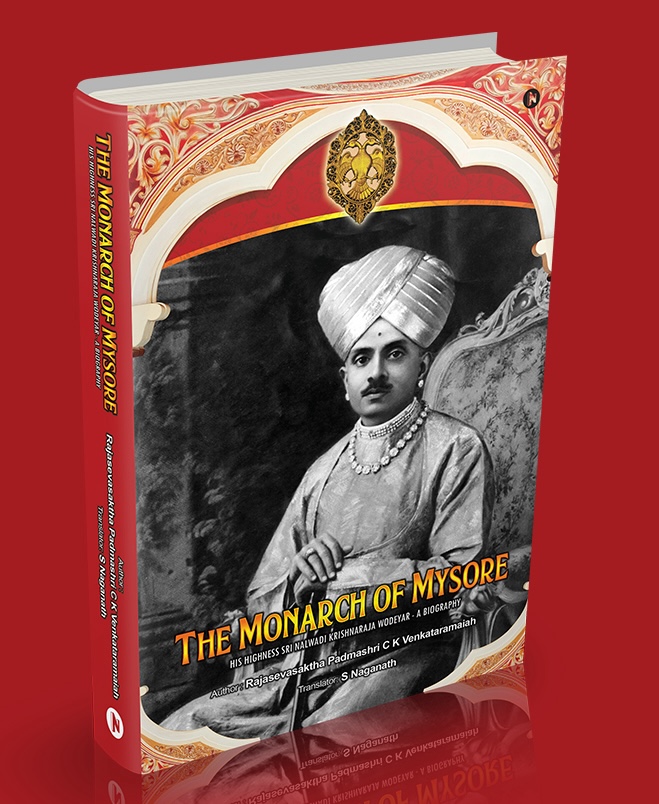
New Book: "The Monarch of Mysore - His Highness Sri Nalwadi Krishnaraja Wodeyar - A Biography" (English Translation)

(Kannada original: "ಆಳಿದ ಮಹಾಸ್ವಾಮಿಯವರು" - ಸಿ. ಕೆ. ವೆಂಕಟರಾಮಯ್ಯ (೧೯೪೧)(ನಾಲ್ವಡಿ ಕೃಷ್ಣರಾಜ ಒಡೆಯರ್ ರವರ ಜೀವನ ಚರಿತ್ರೆ)

We are pleased to feature a new publication titled "The Monarch of Mysore - His Highness Sri Nalwadi Krishnaraja Wodeyar - A Biography". This is an English translation of the Kannada original titled "Aalida Mahiswamigalu" written in 1941 by C. K. Venkataramaiah. Since the original Kannada publication in 1941, the book had not seen a reprint till date, less so a translation. The Kannada book remains as one of the most definitive biographies of the erstwhile monarch written till date. Now, it's English translation hopes to bring this comprehensive tome to a larger, global audience. The translator - S. Naganath, son of Dr. S. Srikanta Sastri has also translated Dr. S. Srikanta Sastri's much acclaimed Kannada cult classic "Bharatiya Samskruti" into English under the title of "Indian Culture - A Compendium of Indian History, Culture and Heritage" in 2021. The book cover has been designed by renowned photographer and graphic artist S. L. Ravishankar. 


This publication, like the earlier translation, has been published by Notion Press Publishers Pvt. Ltd, Chennai and is available in Hardcover, Paperback and eBOOK formats across popular online platforms like Amazon, Flipkart and so on. The book runs to about 580 pages and features around 76 black and white photographs chronicling the life and times of  HH Nalwadi Krishnaraja Wodeyar IV. Some of the storylines, anecdotes and cross-references sourced from correspondences to and from the monarch shed an unique light on this period in the history of the princely state of Mysore. This monarch's early years, his training in administrative matters under the British appointee Stuart Fraser, his travels, the various decisions he took which later served as the very foundation of the modern state of Mysore (and later Karnataka) offer a rare glimpse into the makings of this well known Maharaja. 

We present the blurb from the English translation verbatim, to offer a taste of what the book has to offer: 


In 1399 A. D., Sri Yaduraya Wodeyar founded the “Yadu Vamsa” (dynasty). Later many illustrious rulers expanded the Mysore state in four directions.

This biographical work “Aalida Mahaswamigalu” by Rajasevasaktha Padmasri C. K. Venkataramaiah traces the ebb and tide of history of Mysore. The British Government decided upon restitution of monarchy by appointing Sri Chamarajendra Wodeyar as the successor to Sri Mummadi Krishnaraja Wodeyar in 1881. This enlightened Western educated ruler began modernisation of Mysore through administrative reforms. This fruitful thirteen years reign came to an end by his untimely death.

Sri Nalwadi Krishnaraja Wodeyar aged ten years was appointed as the next successor to the throne by Queen-Empress Victoria. The mother of the young Prince was appointed as the caretaker regent of the Mysore state. The Queen Dowager Sri Vanivilasa Sannidhana Kempananjammani ruled the state ably and efficiently for eight years (1895 – 1902).

After the investiture ceremony in 1902 by Lord Curzon the glorious golden direct rule of Nalwadi Krishnaraja Wodeyar dawned. The Maharaja began modernising the Mysore state through political and economic reforms. The establishment of University of Mysore, Shivana Samudra Hydro-Electric Project, Bhadravathi Iron and Steel factory, KRS dam across river Cauvery, Chemical Industries, Sandalwood oil and soaps & detergents factory, Mysore Silk weaving factory etc are some of his achievements.

The Maharaja adhered to the tenets of “Raja Dharma” and the people called him “Raja Rishi”. Mahatma Gandhi described the Mysore state as “Rama Rajya”. He worked diligently for the emancipation of dalits and women. This progressive rule of the Maharaja came to an abrupt end with his sudden death in 1940 (56 years old). His successor Maharaja Sri Jayachamarajendra Wodeyar continued the benevolent rule for seven years (1940 – 1947) and as Raja Pramukh for three years more (1947 – 1950).

This definitive biography of Nalwadi surveys the seventy years of the historic rule of the Mysore Wodeyars in a comprehensive manner.


To find out more, Click here


Tuesday, February 27, 2024

'The Universal Message of Hindu Dharma according to Swami Vivekananda' by Prof. S. Naganath

In the 21st century, Swami Vivekananda is considered as a rationalist with secular outlook. He interpreted Hindu Dharma in the light of Sri Ramakrishna’s teachings. Max Muller in his book on “Sri Ramakrishna” quotes the words of Ramakrishna, “As a lamp does not burn without oil, so a man cannot live without God”. He told modern man God was essential to man’s existence. According to John. C. Travell, a congregational minister, “Ramakrishna found God in each religion because he did not merely take from them what fitted his own ideas, he sought first to know them from the inside, to understand them for themselves. His devotion was always to God and the truth first. His belief in the underlying unity and harmony of all religions was an expression of that learning.

To read the full article, Click Here.

Monday, February 26, 2024

An overview of “Three hundred Ramayanas”- A critical essay by A. K. Ramanujan - by Prof. S. Naganath

This critical essay is written by the well-known bilingual poet, linguist and scholar A. K. Ramanujan. This essay also carries a subtitle “Five examples and three thoughts on translation”. It is an established fact that the two great epics “Ramayana” and “Mahabharata” have far reaching influence over all of the Indian subcontinent and South – East Asia. During the last two centuries, its appeal has become global. The date of Rama’s birth, the date of Rama’s battle against Ravana and the date of writing of Ramayana by sage Valmiki and the Uttara Ramayana as an added appendage at a later date, all have become topics of unresolved debate.

A. K. Ramanujan gives one version of Ramayana in the beginning of the essay, which deals with the deaths of Lakshmana and Rama. Lord Rama was sitting on his throne and his ring fell through a crevice in the ground and reached the nether world. His trusted Lieutenant Hanuman was sent to fetch the ring as he could reduce his body to the size of an atom. In the absence of Hanuman, Brahma and noted sage Vasistha came to parley with king Rama. Lakshmana was asked to stand guard at the door and not allow anyone to disturb the confidential talks.

To read the full article, Click here.

Saturday, February 24, 2024

An Ancient Seer in Modern Age - Sri Aurobindo (1872 - 1950) by Prof. S. Naganath

Sri Aurobindo’s full name is Aurobindo Acroyd Ghose. His alma mater Cambridge University classified “Acroyd” as a Christian Middle name. His father Dr. Krishnadhan Ghose was a civil surgeon and his mother Swarnalatha Devi (Basu) hailed from a Bengali aristocratic family. His ardent disciples consider his date of birth 15th August 1872 as an ominous indicator of India’s future date of liberation from British colonial Sri Aurobindo’s full name is Aurobindo Acroyd Ghose. His alma mater Cambridge University classified “Acroyd” as a Christian Middle name. His father Dr. Krishnadhan Ghose was a civil surgeon and his mother Swarnalatha Devi (Basu) hailed from a Bengali aristocratic family. His ardent disciples consider his date of birth 15th August 1872 as an ominous indicator of India’s future date of liberation from British colonial shackles.


Dr. K. D. Ghose was a diehard Anglophile and a great lover of Western culture. He sent his three sons to England for proper English school and University education. Sri Aurobindo the youngest son was only seven when he was sent to a distant foreign land six thousand miles away. The three boys were boarders in a clergyman’s house in Manchester city with strict instructions to the caretakers that these three boys must not be allowed to interact with any Indians, and not speak any Indian tongue during their stay in England.
Sri Aurobindo later went to St. Paul’s School in London and later went to Cambridge University on a senior classical scholarship to King’s College. He earned a First Class classical Tripos third division certificate after two years of study and did not graduate from Cambridge University as he did not pursue his final year studies there. Sri Aurobindo had become a true WOG (Westernised Oriental Gentleman) with a good knowledge of Greek, Latin, French, German, Italian and Spanish. He was a European scholar of classics and he did not know any Indian languages including his mother tongue Bengali and the classical language of India Sanskrit. He wrote the I.C.S open examination and got selected in 1890. He deliberately misled the compulsory horse riding test conducted by the examiners and hence got disqualified. Then His Highness Sayyaji Rao Gaekwad of Baroda offered him a job in Baroda Civil Service.

To read full article, Click Here.


Sunday, November 19, 2023

The Goṇḍalī Dance by Dr. S. Srikanta Sastri

In the interesting note on the Goṇḍalī Nṛtya (B.I.S.M.Q. June, 1939) it is pointed out that the dance originated in Karnāṭaka and was connected with the Rēṇukā cult. This is supported by some references in the works on Karnāṭaka Music. Jāyaṇa or Jāya Sēnāpati, the commander of the elephants under the King Gaṇapati of Warangal wrote two works Saṅgīta ratnāvaḷi and Nṛtya – ratnāvaḷī in 1240 A. D. In the latter work he says – 

कल्याणकटके पूर्वे भूतमात्रमहोत्सवे |
सोमेश: कोतुकी काञ्चित भिल्लवेषमुपेयुषीम् |
नृत्यंतीमथ गायन्ती स्वयं प्रेक्ष्य मनोहरम् |
प्रीतो निर्मितवाश्वित्रगोण्डली बिधिमिन्यम् |
यतो भिल्ली महाराष्ट्रे गोण्डलीत्यभिधीयते ||

From this it is clear that the Bhillī dance used to be held at Kalyāṇa, the capital of the Western Cālukyas, and that Somēśvara III, Bhūlokamalla (who was a recognised authority on Music and is the author of Abhilaṣitārthacintamaṇi or Rāja – mānasollāsa) made an improvement and called it Citra Goṇḍalī, since in Mahārāṣtra it was called Goṇḍalī. 

The Saṅgita – samaya – sāra of Pārśvadēva (C. 1200 A. D.) also defines Goṇḍalī dance thus – 

सामान्यं नर्थनं यत्र सम्यमगीतम् प्रवर्तते |
मध्यमा कथिता तेषा गुण्ड्लीति मनीषिभि: ||
(Tr. S. S. Ch. 8. V. 183.)

A manuscript in the Mysore Oriental Library (No. 4798) mentions the following authorities: 

आदिनन्दिउमाप्रोक्तं मोहनं नाट्यदर्पणम् |
संगीतकल्पवृक्षं च संगीतमणिदर्पणं |
कुण्डलीदर्पणं चोच कुण्डलीमणिदर्पणम् ||

It is probable that Kuṇḍalī – darpaṇa and Kuṇḍalī – maṇidarpaṇa also deal with this Goṇḍalī dance. 


To see the original article on the official website, Click here

Thursday, September 28, 2023

'The Two Bhagavatas' by Dr. S. Srikanta Sastri (1933)

It is well known that of the two Puranas – Devi Bhãgavata and Sri Bhagavata, the Saktas and Vaisnavas claim that their own sectarian work is the real Mahapurana composed by Vyasa and the other is a mere Upapurana. In his introduction to the Devi – Bhagavata, Nilakantha asserts that the authority of the Matsya and Saiva Puranas is in favour of the priority of Devi Bhagavata. He quotes the following verses in support.

Bhagavatyas ca Durgayas caritam yatra vidyate
Tattu Bhagavatam proktam na tu Devipuranakam
(Saiva – Madhyesyara mahatmye)


Here Devipuranaka means the Upapurana Kalika Purana
yadidam Kalikakhyam tanmulam Bhagavatam smrtam
(Hemadrsu)


The chief characteristics of Bhagavata are these enumerated in the Matsya: -


यत्राधिकृत्य गयात्रीम् वर्णयते धर्मविस्तर |

वृत्रासुरवधोपेतं तभ्दागवतमिष्यते ||
सारस्वतस्य कल्पस्य मद्ये ये स्युर्नरामरा: |
तद्वत्तान्तोभ्दबं लोके तभ्दागवतमिष्यते ||

Puranantare: -
हयग्रीवब्रह्मविध्या यत्र वृत्रवधस्तथा |
गायत्र्या च स्मारम्भस्तद्वै भागवतं विदु: ||

Thus, the Bhagavata is that work which commences with Gayatri and deals extensively with Dharma, and the story of the killing of Vrtra, in the Sarasvata kalpa, and Hayagriva Brahmavidya. All these are only applicable to the Devi Bhagavata which begins with this mantra.


Click here to read the full article

Thursday, September 21, 2023

THE UTTARA KASI PILLAR INSCRIPTION OF GUHA

This inscription was discovered at Uttara Kasi in Tehri-Gharwal, by Pandit Chiddure Matha Virabhadra Sarma of Secunderabad (Deccan), who took an impression of it and has published some preliminary notices1. The inscription is engraved on the dhvaja stambha before the temple of Siva at the Uttara Kasi. The pillar is called a Sakti Stambha in the inscription and was erected to commemorate the victories of the ruler Guha. The pillar is now called a trisula and current legends assert that Siva’s trisula after the destruction of Tripurasura, was established in this place. 

The inscription is engraved in late Gupta characters of about the sixth century, but earlier than the Banskhera grants of Harsa. The language of the inscription is Sanskrt and the florid Kavya style of the record is reminiscent of the Allahabad inscription of Harisena and the Mehrauli inscription of Candra. The metres used are Sardula-vikridita and Sragdhara. The text begins with the symbol for Om and ends with the letter tha. 

There was a ruler named Ganesvara whose praises were sung by men and who erected the resplendant temple of Bhava, high as the peak of Himavat. This forest ruler (vanajadhipa) considering all his wealth (including amatya etc) as less than an atom and remembering the friendship of Indra, went to Sumeru with a cheerful mind. 

To read rest of the article, Click here


Tuesday, March 14, 2023

Rallapalli Ananta Krishna Sharma

Rallapalli Ananta Krishna Sharma was born on 23 January, 1893 in Rallapalli village in Kambadur taluk, Anantapur district to parents Sri Karnamadakala Krishnamacharya and Smt. Alamelu Mangamma. Sharma was initiated into Telugu and Sanskrit literature by his father at a very young age. He had mastered classics of Kalidasa and the Telugu trio by his 12th year of age. While his father ensured that his son had a keen interest in literature, it was thanks to his mother’s persistence that Sharma’s love for music blossomed into something tangible. Rallapalli Ananta Krishna Sharma and his sister Yadugiramma routinely sang religious hymns at the Hanuman temple inside the fort at Rallapalli village.

Early life 

Sharma left Rallapalli in 1905 and went to Mysore for further education. At Mysore he stayed in the Brahmatantra Parakala Mutt where he came under the influence of Krishnabrahmatantra Swamy. By then quite old, Krishnabrahmatantra Swamy was partially blind and was struggling to read. When Sharma came under his tutelage, he was working on his treatise on ‘Alankara Shastra’ titled ‘Alankara Manihara’. In many respects, Sharma became his eyes and ears and would read aloud the original verses so that the Swamy could hear them better and then spell out his interpretation of the same. 

To read the full biography, click here. 

Thursday, January 19, 2023

T. S. Subbanna - Sarvajanika Subbanna (A Brief Biography)

Taĝaduru Subbappa Subbanna was born in 1905 in Taĝaduru village, Nanjanagud taluk. His father Eshwarappa was the chief priest at the Ankanatheshwara temple in Taĝaduru. His mother Parvatamma was a devout pious lady. 


Early years
Subbanna had his preliminary schooling at Taĝaduru govt. school. Then the family moved to Mysore for his further education. While in Mysore, Subbanna worked part-time as a priest at the Kashi Vishwanatha temple in Madvachar road in Agrahara. Subbanna was admitted to the Wesley Mission High School. Venkatakrishnayya was one of the senior teachers who had a profound impact on him. Some of the British teachers tried to persuade students like Subbanna to focus on their academics instead of spending time in the freedom movement. But Subbanna had already come under the influence of freedom fighters like M. N. Jois, Sharada Prasad, Agaram Ramayya, Subramanyam and Dasappa. Subbanna and friends convened as the ‘Tilak Sangha’ to share news about various freedom fighters from across the country. Subbanna had to slip away to Channapatna (Sogale) to avoid impending arrest. He participated in the civil disobedience movements at Sirsi, Siddapur and Ankola. Subbanna’s mother, in an attempt to distract her son from the freedom struggle, tried to get him married – but this was in vain. Interestingly, Subbanna is remembered to have dressed as a woman in a saree to escape being caught, while participating in a protest march passing in front of Hardwicke High School. He managed to give police the slip and made it to Subbarayana Kere to hoist the Indian flag! On another occasion, while being pursued, he ran into a coal plant and smeared himself with coal soot and succeeded in evading arrest! Subbanna was among the freedom fighters to hoist the flag at Shivapura in Maddur. He then made his way to Sabarmati ashram where he spent time imbibing the Gandhian way of life directly from the Mahatma! 

To read the complete biography, please Click Here.